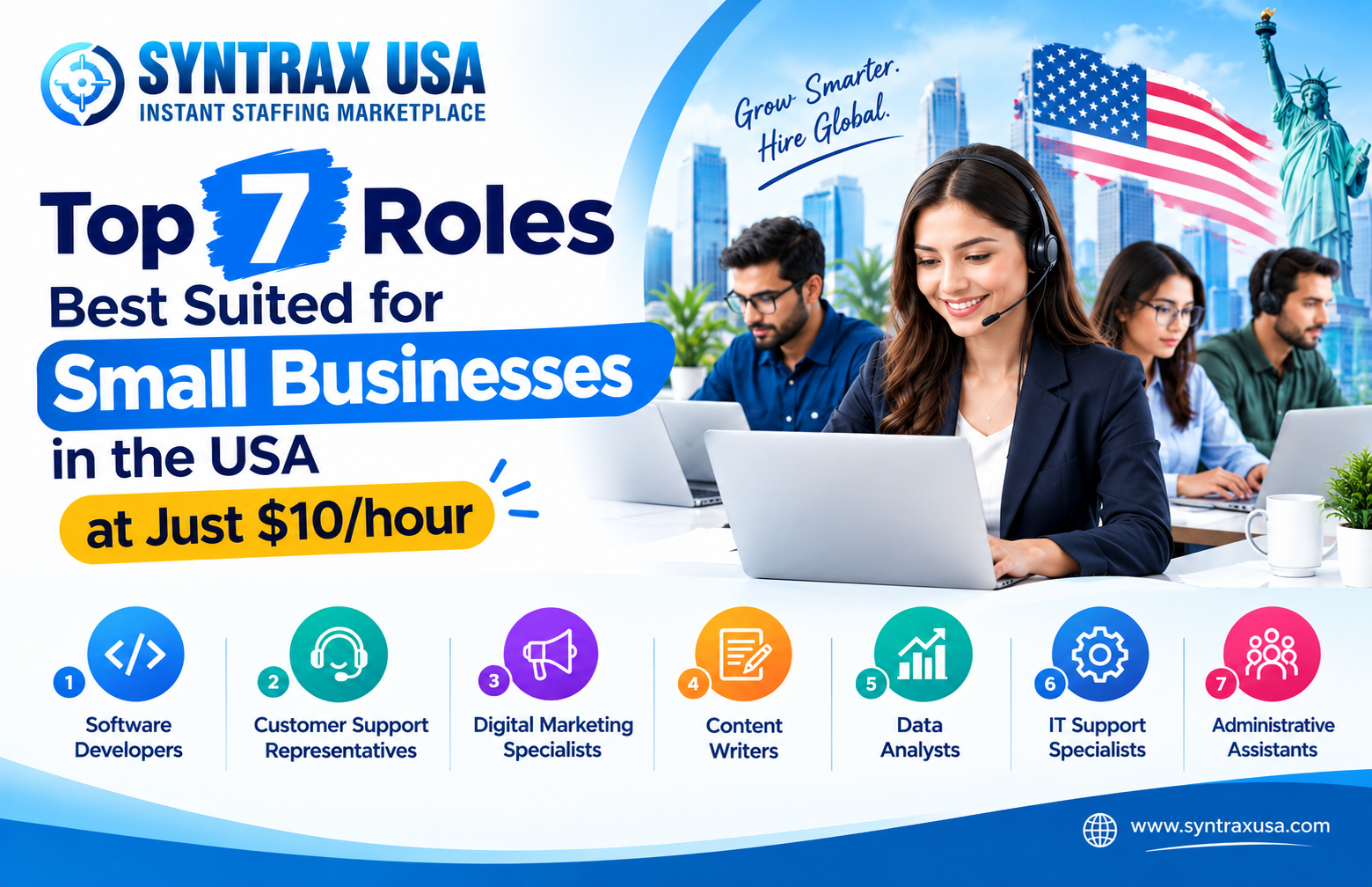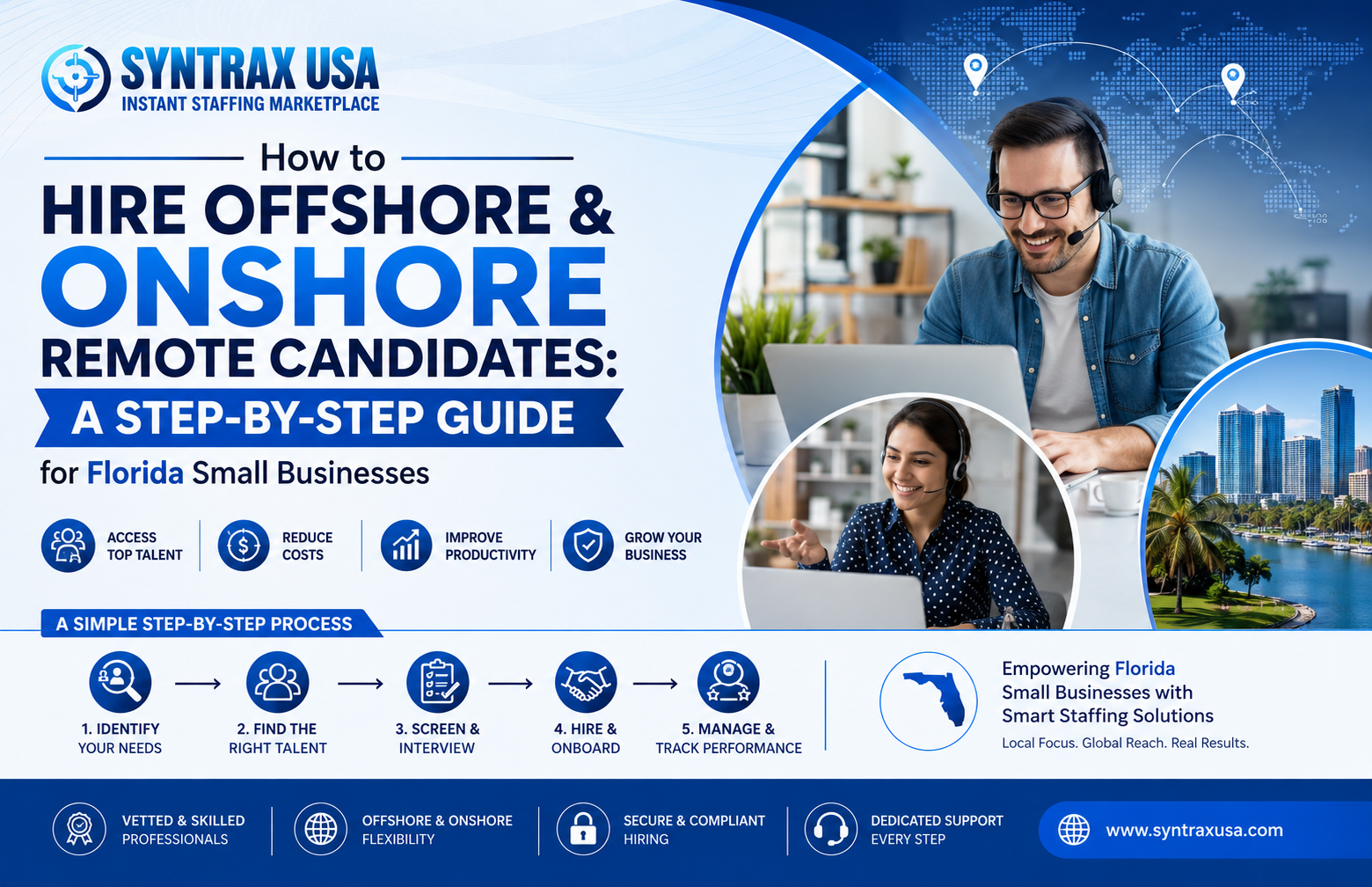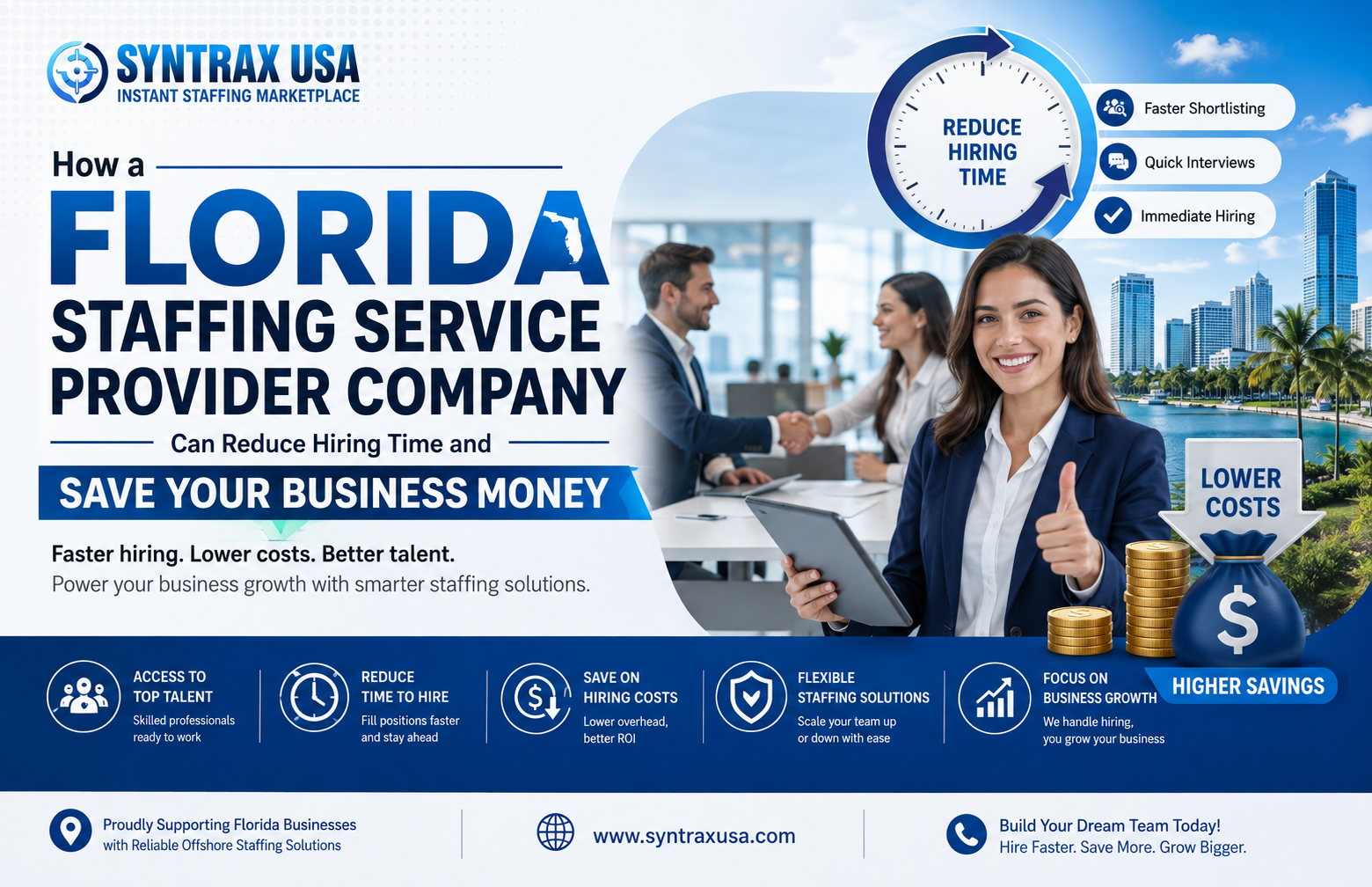
In today’s competitive business environment, hiring the right talent quickly and cost-effectively is critical. US companies evaluating staffing options often face three primary models: onshore, nearshore, and offshore. Each has strengths and trade-offs, but offshore staffing agencies are increasingly the choice for companies aiming to scale, reduce costs, and access specialized skills. Here’s a clear comparison and why many organizations turn to offshore partners like those featured at syntraxusa.com.
Understanding the three models
- Onshore staffing: Talent is sourced and employed within the same country as the hiring company. This offers the highest cultural alignment, minimal time-zone differences, and straightforward compliance with local labor laws. Onshore staffing is ideal when proximity, quick in-person collaboration, or strict regulatory requirements are essential.
- Nearshore staffing: Talent is sourced from neighboring or nearby countries—often within the same region or time zone. For US companies, this commonly means Latin America or Canada. Nearshore blends lower cost than onshore with easier communication and closer time-zone overlap than offshore.
- Offshore staffing: Talent is sourced from geographically distant countries—commonly in Asia, Eastern Europe, or parts of Africa. Offshore staffing delivers the greatest cost advantages and access to large talent pools with specialized technical skills.
Why US companies choose offshore agencies
- Cost efficiency at scale
Offshore staffing agencies typically offer significant labor-cost savings compared with onshore hires. For roles with high demand—software development, customer support, and back-office functions—offshore teams can reduce salary and operational expenses without proportionate drops in capability. Savings often extend beyond wages to infrastructure, benefits, and overhead. - Access to large, specialized talent pools
Many offshore markets have deep talent pools in areas like software engineering, data science, QA, and digital marketing. Agencies in these regions maintain pipelines of vetted candidates with experience across frameworks, languages, and industries—making it faster to fill hard-to-find roles. - Faster scaling and flexible resourcing
Offshore staffing agencies excel at rapidly building teams to meet project timelines. Whether a company needs a dedicated development squad for a six-month product push or ongoing customer support across multiple shifts, offshore partners can quickly assemble and adjust teams to match changing needs. - 24/7 operations and extended coverage
Geographic separation can be a strategic advantage. Offshore teams operating in different time zones enable near-continuous development cycles, faster issue resolution, and round-the-clock customer service—delivering better time-to-market and customer experience. - Specialized agency expertise
Reputable offshore agencies offer more than hiring; they bring recruitment know-how, HR practices tailored to local labor markets, onboarding processes, and compliance support. This reduces administrative burden for US HR teams and mitigates risks tied to international employment.
Addressing common concerns
- Communication and cultural fit: Modern offshore agencies prioritize English fluency, cultural training, and overlap hours for collaboration. Structured onboarding, regular syncs, and clear documentation reduce friction.
- Quality and oversight: Agencies use vetting, trial periods, and performance KPIs. Many clients adopt hybrid models where core roles remain onshore while offshore teams handle production or support work, balancing control with cost savings.
- Security and compliance: Leading agencies implement data protection practices, IP agreements, and secure infrastructure. Companies should verify agency certifications, contracts, and incident response plans as part of vendor selection.
When offshore is the right choice
Offshore staffing makes sense when cost control, rapid scaling, or access to specialized talent are priorities. It’s particularly effective for product development, engineering, support centers, and repetitive or high-volume functions where high-quality work can be delivered remotely.
Making offshore work for your business
- Define clear roles and responsibilities, milestones, and KPIs.
- Choose agencies with proven track records, client references, and transparent processes.
- Start with a pilot project to validate communication, quality, and integration before scaling.
- Invest in tooling, documentation, and overlapping hours to bridge time-zone gaps.
Conclusion
Onshore, nearshore, and offshore each serve distinct strategic needs. For US companies looking to reduce costs, access global expertise, and scale quickly, offshore staffing agencies offer compelling advantages—provided companies partner with reputable agencies and put governance, communication, and security measures in place. For trusted offshore staffing solutions that combine experience and reliability, explore options tailored to US businesses at syntraxusa.com.